
Gravel Driveways in Gloucester & Gloucestershire
Attractive, Affordable Gravel Driveways Installed in Gloucestershire
Gravel Driveways in Gloucester & Gloucestershire
Natural, Low-Maintenance Gravel Driveways in Gloucester
A gravel driveway is one of the most affordable, attractive and practical driveway options available — and it’s particularly well-suited to properties across Gloucestershire. At SJS Landscaping & Gardening, we install high-quality gravel driveways across Gloucester, Cheltenham, Stroud, Cirencester and all surrounding areas, using proper excavation, compacted sub-bases, weed membranes and quality aggregates to create driveways that stay level, stable and looking good for years.
Gravel works beautifully with Gloucestershire properties in particular. Warm, honey-toned Cotswold aggregate complements the county’s stone cottages, period homes and rural settings perfectly — giving a natural, timeless look that tarmac or concrete simply can’t match. For modern suburban homes across Gloucester, Quedgeley, Churchdown and Bishops Cleeve, darker granites and mixed aggregates offer a clean, contemporary feel at a fraction of the cost of block paving or resin.
Gravel is also naturally permeable, which means it drains freely and doesn’t require planning permission — unlike impermeable surfaces such as tarmac or imprinted concrete which need permission if covering more than 5 square metres of front garden. This makes gravel one of the simplest, most hassle-free driveway options for any Gloucestershire home.
Get a Free Gravel Driveway Quote
If you’re planning a gravel driveway in Gloucester or anywhere across Gloucestershire, we’d be happy to help. Call us on 0800 656 9671, 01452 899 402 or 07593 952 715 to arrange a free, no-obligation visit.
Our Gravel Driveway Services in Gloucester
New Gravel Driveway Installation
We install gravel driveways from the ground up — starting with full excavation of existing turf or old surfaces, followed by a compacted MOT Type 1 sub-base (minimum 100–150mm depth for domestic vehicle use), a heavy-duty weed membrane to prevent growth from below, and a 50–75mm layer of your chosen decorative gravel. Every stage is done properly to create a surface that's flat, stable, well-drained and long-lasting — not just gravel dumped on top of soil, which sinks and spreads within months.
Wide Choice of Gravel Types
We offer a wide range of decorative aggregates to suit every property style and budget. Warm Cotswold limestone chippings and golden gravel are the most popular choices across the Cotswold areas around Cirencester, Stroud and the surrounding villages — they complement the local stone architecture beautifully. For Gloucester's modern estates, darker granite chippings, slate, and mixed-tone aggregates give a cleaner, more contemporary look. We also offer pea gravel, angular gravel (which interlocks better and resists movement underfoot and under wheels), and a range of colour blends. We'll bring samples to your site visit so you can see the options against your property.
Edging & Border Options
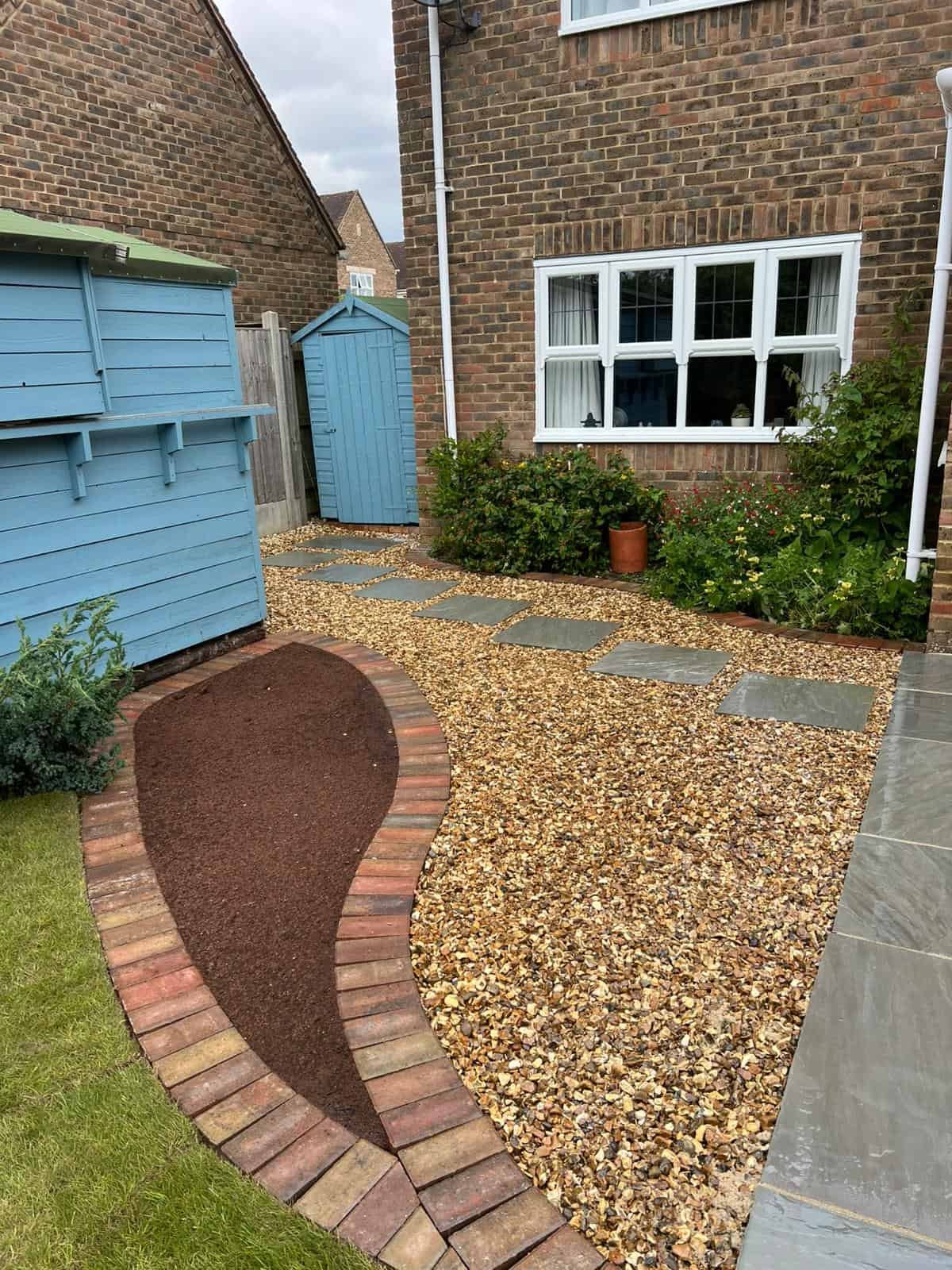
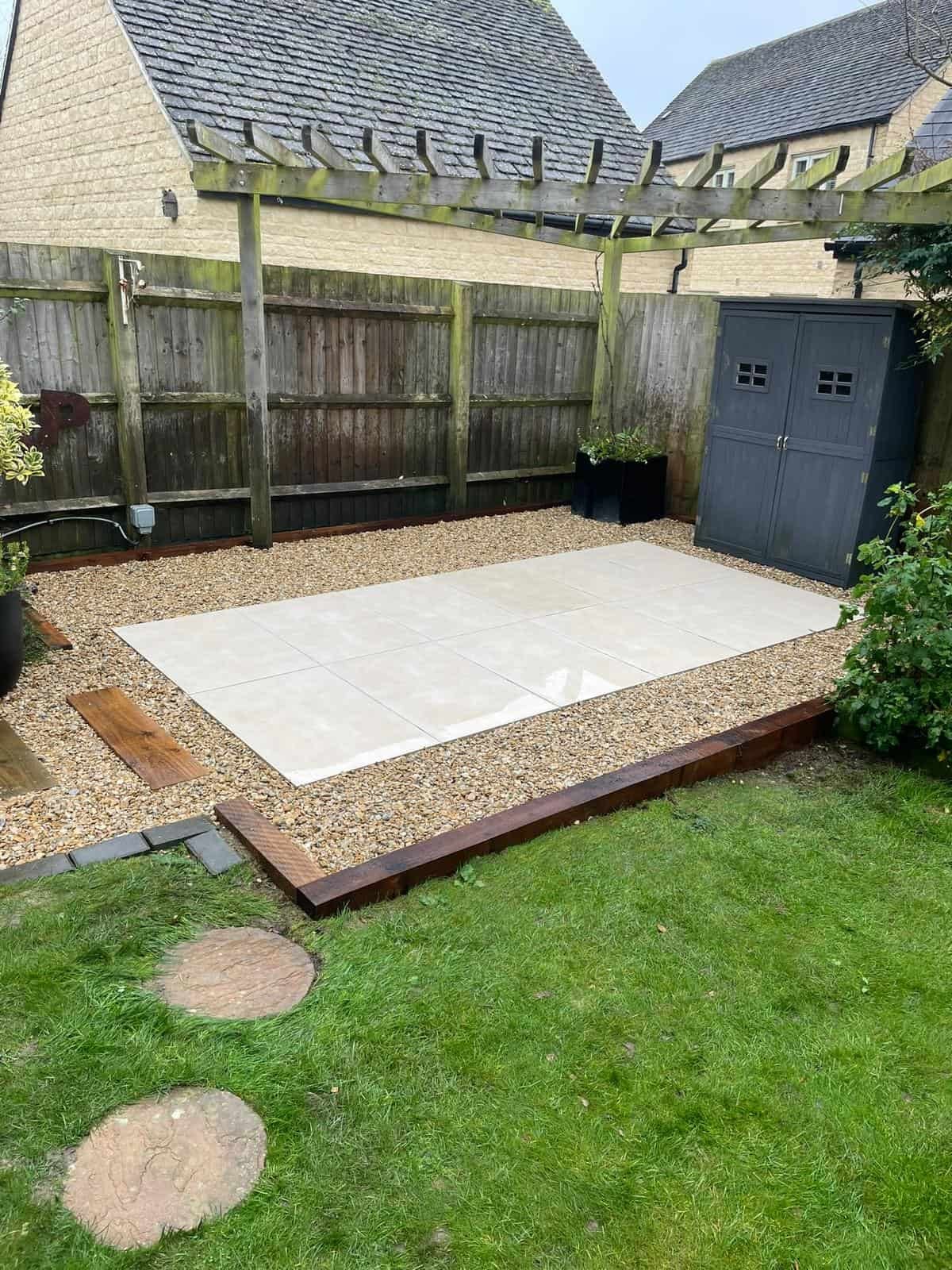
Proper edging is essential for a gravel driveway — without it, the gravel migrates onto lawns, paths and the road within weeks. We install block paving borders, granite sett edging, concrete kerbs, treated timber sleepers or metal lawn edging depending on the look you want and the style of your property. Well-chosen edging doesn't just contain the gravel — it frames the driveway and lifts the whole appearance of your frontage.
Driveway Levelling & Reshaping
If your existing gravel driveway has developed ruts, bald patches, waterlogging or uneven areas from years of use, we can reshape, re-level, compact and top up the surface to restore it without a full reinstall. Where the sub-base has failed or the original installation was poor (no membrane, insufficient depth, no edging), we'll advise on whether a top-up is worthwhile or whether a full rebuild from the base up would be more cost-effective in the long run.
Drainage-Friendly Surface
Gravel is inherently permeable — rainwater drains straight through the surface into the ground below rather than pooling or running off into the road. This makes gravel driveways fully compliant with SuDS (Sustainable Drainage Systems) regulations without needing any additional drainage infrastructure, soakaways or planning permission. For properties in flood-prone areas of Gloucestershire — particularly across the Severn Vale where surface water management is increasingly important — gravel is one of the most practical and affordable solutions.
Do You Need Planning Permission for a Gravel Driveway?
Planning Permission & Gravel Driveways
In almost all cases, no. Because gravel is a permeable surface, it’s exempt from the planning permission rules that apply to impermeable driveways like tarmac, concrete or standard block paving.
Under UK permitted development rules (updated to reflect SuDS — Sustainable Drainage Systems — requirements), you need planning permission if you’re paving over more than 5 square metres of front garden with an impermeable material that drains onto the road. Gravel doesn’t fall into this category because rainwater drains straight through the surface into the ground below.
This is one of gravel’s biggest practical advantages — you can install a gravel driveway of any size without needing to apply for planning permission, wait for council approval, or install additional drainage infrastructure. The only exceptions are properties within certain conservation areas or where specific local restrictions apply.
If you’re replacing an old impermeable driveway (tarmac or concrete) with gravel, you’re actively improving the drainage situation — and you still won’t need planning permission.
For comparison, block paving, tarmac and imprinted concrete driveways all typically require either permeable variants, additional soakaway drainage, or planning permission when covering more than 5sqm of front garden.
How Does Gravel Compare to Other Driveway Types?
Gravel vs Other Driveway Types
Gravel is the most affordable driveway option, but it’s not right for every situation. Here’s how it compares:
Gravel vs Block Paving
Block paving is more decorative and hard-wearing, with no loose surface to rake — but it costs significantly more (typically £75–100+/sqm vs £50–70/sqm for gravel). Gravel is better suited to longer driveways, rural settings and tighter budgets.
Gravel vs Tarmac
Tarmac gives a clean, solid surface with no loose material, but it's impermeable (requiring SuDS drainage or planning permission) and costs more. Gravel drains naturally, needs no planning permission, and suits properties where a softer, more natural look is preferred.
Gravel vs Resin
Resin-bound driveways offer a smooth, bound finish using the same aggregates as gravel — but at a much higher cost. Resin is a premium option; gravel gives a similar colour palette at a fraction of the price.
Gravel vs Imprinted Concrete
Imprinted concrete is decorative and weed-free but impermeable and prone to cracking over time. Gravel is more forgiving on the ground beneath and easier to repair.
Not sure which is right for your property? We install all five driveway types and can advise during a free site visit.
Why Choose Us For Your Gravel Driveway?
Professional Gravel Driveway Installers in Gloucester
Local, Friendly Team
We work across Gloucestershire every day and know the county's properties, soil types and local aggregate options inside out. Whether it's recommending warm Cotswold limestone for a period cottage or dark granite chippings for a modern estate, we offer practical, honest advice tailored to your property and location.
Quick Installation
Gravel driveways are one of the fastest driveway types to install. A standard single-car driveway can typically be completed in 1–2 days, and a larger double driveway in 2–3 days. This minimises disruption to your household and means you're using your new driveway within days, not weeks.
Flexible Design Options
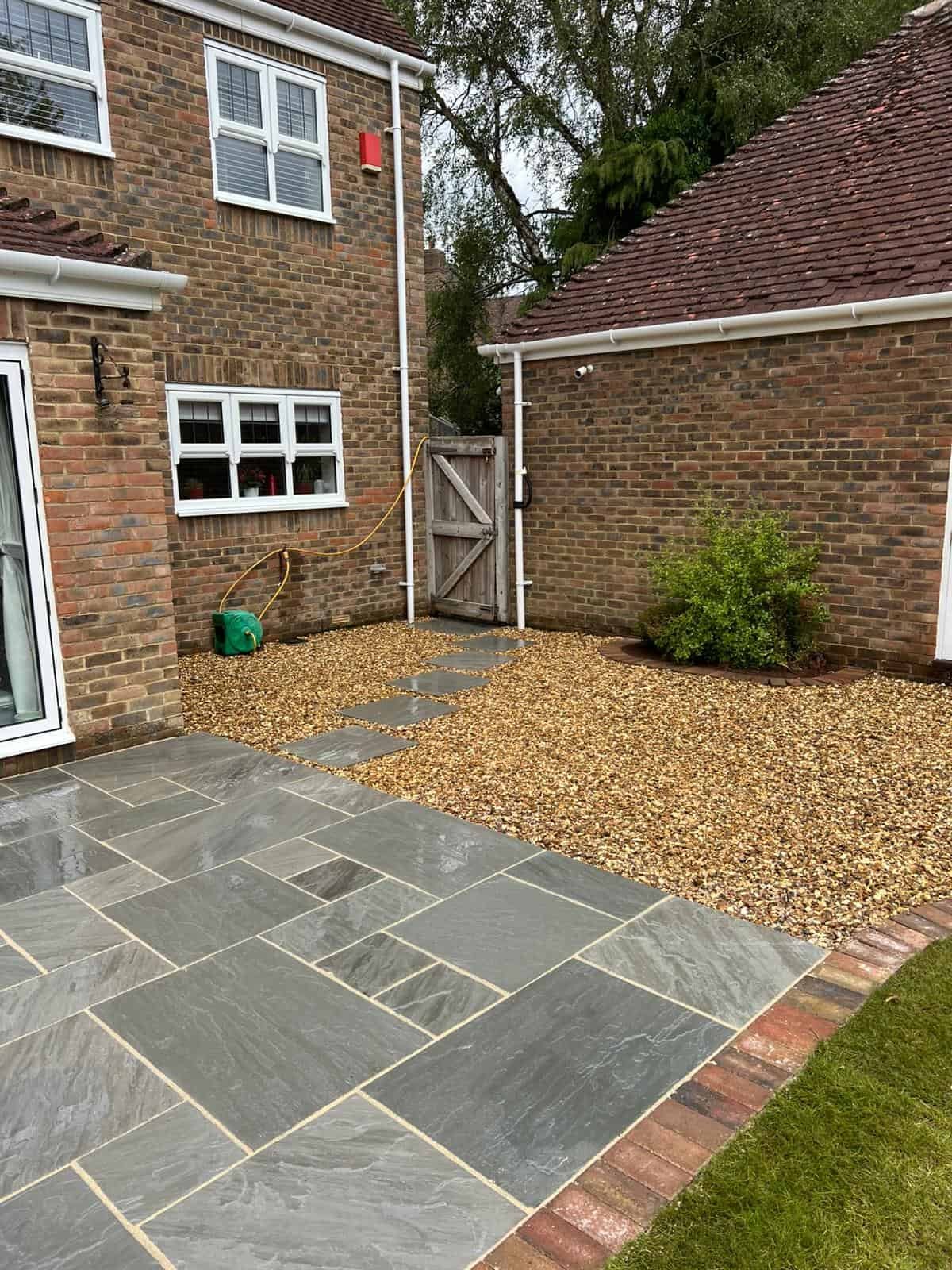
Gravel adapts to any driveway shape — curved layouts, wider parking areas, circular drives, narrow side accesses and irregular plots all work perfectly. Combined with decorative edging (block, stone, sleeper or metal), you can create a driveway that looks designed, not just functional. Gravel is also easy to combine with pathways, landscaping and planting as part of a wider garden project.
No Planning Permission Needed
Because gravel is permeable, you won't need planning permission for a gravel driveway of any size — avoiding the paperwork, fees and delays that impermeable surfaces like tarmac or concrete require when covering more than 5sqm of front garden.
Gravel is the most cost-effective driveway material, but we don't cut corners on the groundwork underneath. Every gravel driveway we install includes proper excavation, membrane, compacted sub-base and edging — because a cheap gravel job without proper foundations sinks, spreads and looks terrible within a year.
How We Install a Gravel Driveway
A gravel driveway is only as good as the groundwork underneath it. Here’s our process:
Site Visit & Quote
We visit your property, measure the driveway area, assess existing ground conditions and drainage, discuss your aggregate and edging preferences, and provide a clear, itemised quote.
Excavation
We excavate the existing surface (turf, old tarmac, concrete, or soil) to a depth of 200–250mm. This creates room for the sub-base and gravel layers. All excavated material is removed from site.
Geotextile Membrane
A heavy-duty weed membrane is laid over the excavated ground. This prevents weeds from growing up through the gravel and stops the sub-base material from mixing with the soil below — which is what causes sinking and instability if skipped.
Sub-Base
We lay and compact a 100–150mm layer of MOT Type 1 crushed stone (or Type 3 for enhanced permeability). This is compacted with a vibrating plate to create a solid, load-bearing foundation that spreads the weight of vehicles evenly.
Edging
Edge restraints are installed — block, stone, sleeper, metal or concrete — to contain the gravel and define the driveway's shape. This step is critical for preventing gravel migration.
Gravel
Your chosen decorative gravel is spread evenly to a depth of 50–75mm. We recommend 20mm angular aggregate for driveways because it interlocks under compaction and resists displacement by wheels and feet far better than rounded pea gravel.
Clean-Up
All waste, soil and packaging removed. Driveway raked level. Paths and road swept clean.

Get a Free Gravel Driveway Quote in Gloucestershire
Whether you want a brand-new gravel driveway, a reshape and top-up of an existing one, or advice on the best aggregate for your property, we’d be happy to help. We cover Gloucester, Cheltenham, Stroud, Cirencester and all surrounding areas. Give us a call or fill out the form below.
Freephone
Office
Mobile
All information shared with SJS Landscaping & Gardening is kept safe and secure.
Gravel Driveways Installed Across Gloucester & Gloucestershire
We install gravel driveways right across the county — from modern suburban homes in Gloucester, Quedgeley and Churchdown to Regency properties in Cheltenham, Cotswold stone cottages near Cirencester, and hillside homes across the Stroud valleys. Wherever you are in Gloucestershire, we'll recommend the right aggregate, edging and design for your property.
- Gloucester
- Cheltenham
- Stroud
- Cirencester
- Tewkesbury
- Dursley
- Cinderford
- Cam
- Churchdown
- Stonehouse
- Quedgeley
- Bishops Cleeve
- Winchcombe
- Nailsworth
- Coleford
- Brockworth
- Longlevens
- Abbeydale
Gravel Driveways FAQs
If you’ve got questions about our services, the process or what to expect, the FAQs below should help – and if you need anything else, just give us a call.
Very little. An occasional rake to redistribute any displaced gravel (particularly in areas where cars turn), and a top-up every few years to replace any stone lost to displacement or compaction is usually all that's needed. If you installed proper edging and a weed membrane, weed growth should be minimal. The odd stray weed can be pulled by hand or treated with a spot weedkiller.
Not with proper edging. We install solid edge restraints on every gravel driveway — block borders, granite setts, concrete kerbs, treated timber sleepers or metal edging depending on the style — to keep the gravel neatly contained. The edging also prevents gravel from migrating onto the road, pavement or lawn over time.
Yes — gravel can work on gentle slopes, especially if you use angular aggregate (rather than rounded pea gravel) which interlocks under compaction and resists sliding. For steeper slopes, gravel stabilisation grids can be installed beneath the surface layer to lock the gravel in place permanently — preventing ruts, channels and washout even on gradients up to about 15%. We assess every site and advise on the best approach for your specific gradient.
With proper groundwork (excavation, membrane, compacted sub-base, edging), a gravel driveway can last decades. The sub-base and membrane are permanent — it's the decorative gravel layer on top that may need occasional topping up every 3–5 years. This makes long-term maintenance very affordable compared to other driveway types that may need more costly repairs.
Call us on 0800 656 9671, 01452 899 402 or 07593 952 715, or fill out the form on this page. We'll arrange a free site visit, measure up, discuss your aggregate and edging options, and provide a clear, written quote. All quotes are free with no obligation. We cover the whole of Gloucestershire.
A fully installed gravel driveway with proper excavation, membrane, compacted sub-base, edging and decorative gravel typically costs between £50 and £70 per square metre in Gloucestershire. For a standard single-car driveway of around 25–30sqm, that's roughly £1,250–£2,100. The exact cost depends on the size, the aggregate you choose, ground conditions, edging type and whether old surfacing needs removing. We provide itemised quotes after a free site visit.
A standard gravel driveway takes 1–2 days to complete. Larger driveways, driveways requiring significant excavation (e.g. removing old tarmac), or designs with complex edging may take 2–3 days. We'll confirm the expected timeframe in your quote.
No — because gravel is a permeable surface, you don't need planning permission regardless of the driveway size. This is a significant advantage over impermeable surfaces like standard tarmac or concrete, which require planning permission (or additional drainage) when covering more than 5 square metres of front garden. The only exception is if your property has specific local restrictions or is in a conservation area — we'll advise if this applies.
For driveways, we recommend 20mm angular aggregate — it interlocks under compaction and resists displacement far better than rounded pea gravel or smooth river stone. Popular choices in Gloucestershire include Cotswold limestone chippings (warm honey tones), golden gravel, granite chippings (grey/charcoal), and mixed-tone decorative blends. We bring samples to your site visit so you can compare against your property's brickwork, stonework and surroundings.
Stabilisation grids are plastic honeycomb panels that sit beneath the gravel layer. They hold the gravel in place permanently, preventing ruts, displacement and migration — even under regular vehicle traffic. They also make the surface easier to walk on with pushchairs, wheelchairs and wheeled bins. Grids are particularly useful for sloped driveways or high-traffic areas. They add a modest cost to the installation but significantly improve long-term performance.
Yes — one often-overlooked advantage of gravel is the noise it makes underfoot. It's very difficult to walk across a gravel driveway quietly, which acts as a natural alert system for visitors and a deterrent for intruders. This makes gravel a practical choice for rural or detached properties where security is a consideration.
Absolutely — many clients combine a gravel driveway with new fencing, a patio, turfing, or a full front garden landscaping project. Doing everything together is usually more cost-effective and ensures all elements are designed to work together.