
Wooden Decking in Gloucester & Gloucestershire
Quality Wooden Decking Installed Across Gloucestershire
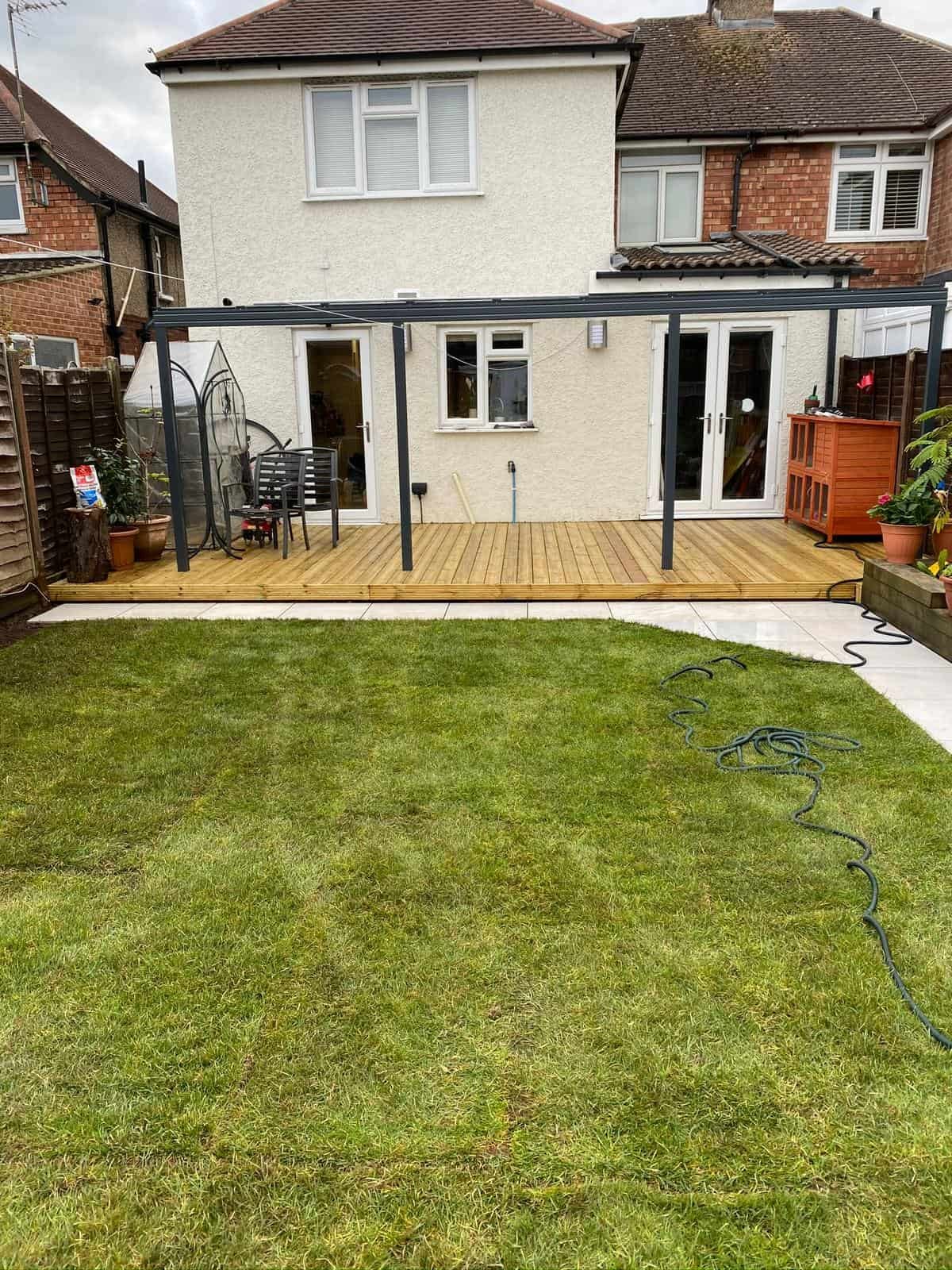
Timber Decking Installation Across Gloucester & Gloucestershire
Natural, Stylish Timber Decking for Gardens in Gloucester
Wooden decking brings natural warmth, character and texture to any garden — and it’s one of the most versatile ways to create a usable outdoor space for dining, relaxing, entertaining or simply extending your living area into the garden. At SJS Landscaping & Gardening, we design and build timber decking across Gloucester, Cheltenham, Stroud, Cirencester and all surrounding areas, using pressure-treated softwood or hardwood on a properly constructed subframe that keeps your deck strong, level and safe for years.
A deck is only as good as the structure underneath it. We build every deck on a solid timber subframe — joists on bearers, supported by concrete pad footings or adjustable pedestals — with proper spacing for air circulation underneath (essential for preventing rot in Gloucestershire’s damp climate). The boards go on top of a frame that’s engineered to carry weight, resist movement and last. This is the difference between a properly built deck and the kind that bounces, warps and rots within a few years.
Wooden decking is particularly effective on sloped or uneven gardens — a raised deck can transform an unusable slope into a flat, practical outdoor space. This is especially relevant across the Stroud valleys and Cotswold hillsides where many gardens have significant gradients. We also install decking as part of wider landscaping projects, combining it with patios, fencing, turfing and brickwork in one coordinated build. If you’d prefer a low-maintenance alternative to timber, we also install composite decking — and we’ll help you decide which suits your garden, your budget and your lifestyle.
Get a Free Wooden Decking Quote
If you’re considering wooden decking in Gloucester or anywhere across Gloucestershire, we’d be happy to help. Give us a call on 0800 656 9671, 01452 899 402 or 07593 952 715 to arrange a free, no-obligation visit.
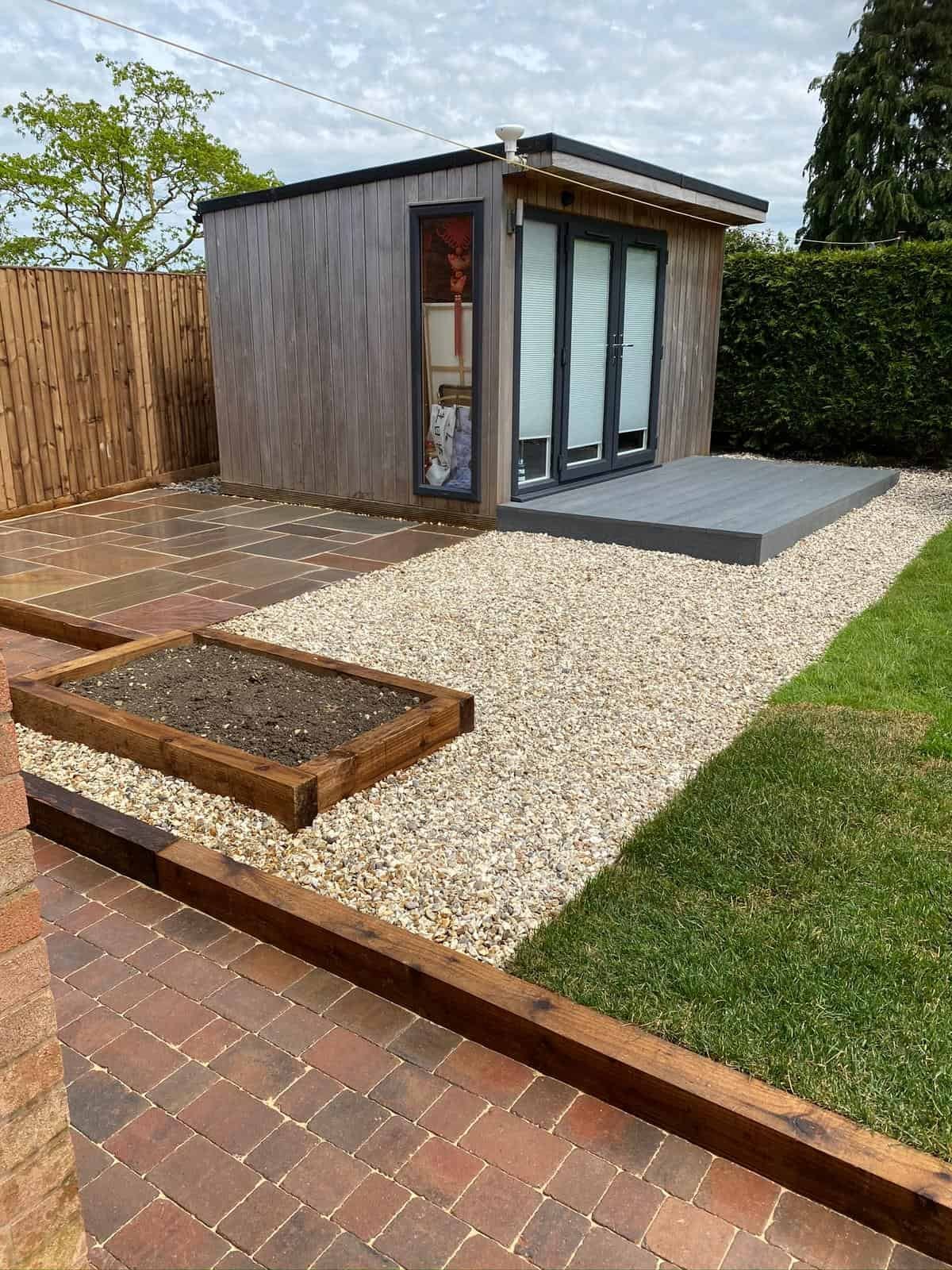
Our Wooden Decking Services in Gloucester
New Timber Deck Installation
We supply and install timber decking on a properly constructed subframe — pressure-treated C16/C24 joists on bearers, supported by concrete pad footings or adjustable pedestals, with stainless steel fixings throughout. The boards (pressure-treated softwood as standard, hardwood available) are screwed down individually with consistent spacing for drainage and ventilation underneath. We build decks at ground level, slightly raised, or fully elevated — whatever your garden needs. Every deck is checked for level, feels solid underfoot and is finished neatly with trimmed edges and clean detailing.
Raised Decking & Multi-Level Platforms
On sloping or uneven ground, a raised deck creates a flat, practical outdoor living area without the cost and disruption of excavating and re-grading the entire garden. We build raised platforms at any height — from a single step up to full elevated decks that bridge significant slopes. Multi-level decking with connecting steps and landings is ideal for hillside gardens across Stroud and the Cotswold hillsides, where different levels can create separate zones for dining, seating and planting. Decking raised more than 300mm above ground may require planning permission and/or building regulations approval — we'll advise on this during your site visit.
Steps, Rails & Balustrades
Timber steps, handrails, spindles and balustrades are essential for raised decking (building regulations require a balustrade on any platform over 600mm above ground) and improve both safety and appearance on lower decks too. We build all balustrade and step components from matching timber for a clean, integrated look — or we can use glass or metal infill panels for a more contemporary style. Every balustrade is structurally fixed, not just decorative, and meets the relevant building regulation standards for strength and height.
Decking Repairs & Re-Boards
If your existing timber deck has rotten boards, cracked or splintered surfaces, loose fixings, or a bouncy/unstable feel, we can assess whether a board replacement, structural repair or full rebuild is needed. Often, if the subframe is still sound, we can replace damaged boards and re-fix loose sections without rebuilding from scratch — saving significant cost. If the frame itself has rotted (common when decks are built directly on soil without proper air gap and footings), a full rebuild is the only safe option.
Full Removal & Replacement
When an old deck is unsafe, rotten or structurally compromised, we dismantle it completely, remove all old timber and fixings, and install a brand-new deck from the ground up — new footings, new subframe, new boards. We can match the layout and size of the original or redesign the space to suit how you actually use the garden now. All old timber and waste is removed from site. If you'd like to upgrade from timber to composite decking at this stage, we can advise on the options.
How We Build a Timber Deck
Site Visit & Design
We measure the area, discuss the layout (shape, height, steps, rails), assess ground conditions and levels, and provide a clear, itemised quote. We'll advise on softwood vs hardwood, raised vs ground-level, and any planning/building regulation considerations.
Ground Clearance & Preparation
Old decking, vegetation, turf or debris is removed. For ground-level decks, we lay a weed membrane under the deck area and spread gravel to prevent weed growth and improve drainage underneath. For raised decks, concrete pad footings or pier blocks are set at calculated intervals to support the frame.
Subframe Construction
The structural framework — bearers and joists in pressure-treated C16/C24 timber — is assembled on the footings, levelled precisely, and secured. Joist centres are typically 400mm for residential use (closer for heavier loads like hot tubs). The frame is the structural core of the deck — it must be level, rigid and built to carry the intended load. We leave a minimum 150mm air gap beneath the frame to allow ventilation, which is critical for preventing rot in Gloucestershire's damp climate.
Deck Board Laying
Pressure-treated softwood or hardwood boards are screwed onto the joists with stainless steel screws (not nails — screws hold tighter and are easier to replace if a board needs attention later). Boards are laid with a consistent 5–8mm gap for drainage and expansion. Ends are trimmed neatly and fascia boards are fitted around the perimeter for a clean, finished look.
Steps, Rails & Finishing
Steps are built with proper stringers and treads. Handrails, balustrades and spindles are fitted where required (mandatory for platforms over 600mm above ground). All cut ends and exposed timber are treated with preservative. The deck is sanded smooth if needed and given a final inspection.
Clean-Up & Handover
All waste removed, surrounding garden tidied. We provide maintenance advice — including treatment schedule and how to keep the deck looking its best.
How to Maintain Your Wooden Deck
Looking After Wooden Decking
Wooden decking does need more maintenance than composite — that’s the trade-off for its natural appearance and lower upfront cost. Here’s what’s involved:
Softwood (pressure-treated pine)
— needs an annual treatment with a decking oil, stain or preservative to maintain weather resistance and prevent greying, cracking and algae growth. Before treating, sweep the deck clean and give it a wash (gentle pressure washer or decking cleaner). This annual treatment takes a few hours and keeps the deck looking good and lasting its full 10–15 year lifespan.
Hardwood (Balau, Iroko, oak)
— naturally more durable and can be left to weather to an attractive silver-grey if you prefer. If you want to maintain the original colour, apply a hardwood oil once or twice a year. Hardwood decking lasts 20–40 years with minimal intervention.
All timber decks
— keep the surface clear of leaves and debris (especially in autumn and winter — leaf build-up traps moisture and encourages algae). Treat algae spots with a proprietary deck cleaner. Check fixings annually and re-tighten or replace any that have worked loose. If you'd prefer us to handle the maintenance, we offer seasonal deck cleaning and treatment as part of our garden maintenance service.
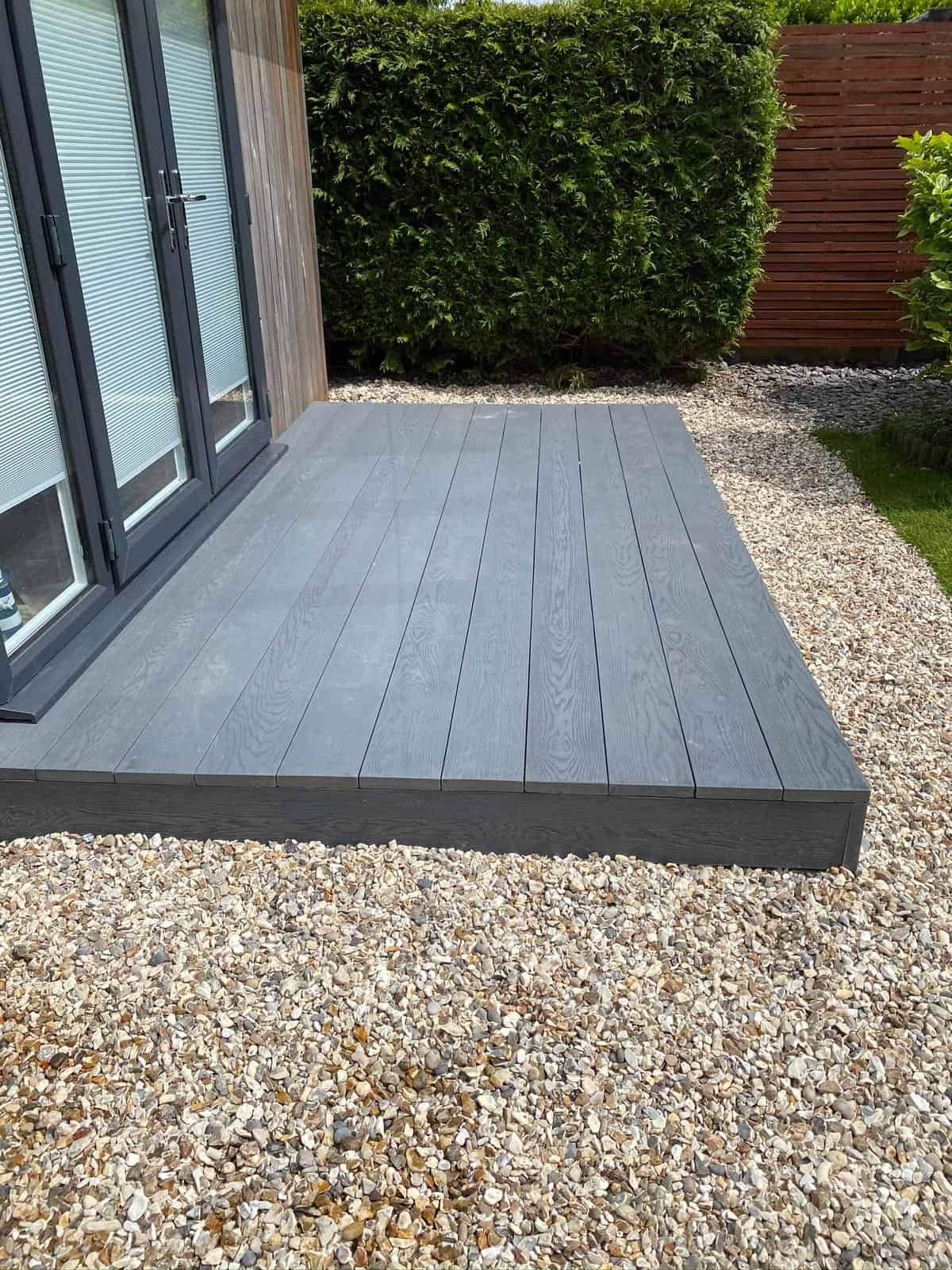
Wooden Decking vs Composite Decking
This is the most common decision our clients face. Here’s an honest comparison:
Wooden decking
— lower upfront cost (softwood £60–120/sqm vs composite £80–150/sqm installed), natural warmth and character, can be stained or oiled to change colour, repairs are straightforward (individual boards can be replaced). The trade-off: needs annual treatment (oil/stain), has a shorter lifespan (softwood 10–15yr, hardwood 20–40yr), and can become slippery if not maintained.
Composite decking
— higher upfront cost, but virtually zero maintenance (no staining, oiling or annual treatment), won't rot, splinter or warp, and lasts 25+ years. Available in a range of colours and finishes. The trade-off: costs more initially and doesn't have the same natural timber look and feel.
For budget-conscious projects or gardens where the natural timber aesthetic matters most, wooden decking is the better choice. For clients who want a deck they can enjoy without any ongoing maintenance, composite is usually the smarter long-term investment. We install both and help you decide during your free site visit.
Professional Wooden Decking Builders in Gloucester
Why Choose Wooden Decking?
Natural Look & Feel
Real timber brings warmth, texture and natural character that composite can't quite replicate. Wooden decking blends beautifully with planting, lawns, garden walls and traditional Gloucestershire settings — from Cotswold stone gardens around Cirencester to established plots in Cheltenham and Stroud.
Flexible Design Options
Timber can be cut, shaped, raised and extended to suit almost any garden layout. Curved edges, angled boards, multi-level platforms, built-in seating, planter surrounds, pergola integration — wooden decking adapts to the space rather than dictating it.
Cost-Effective
Pressure-treated softwood decking is one of the most affordable ways to create a solid, attractive outdoor living area — typically £60–£120 per square metre installed. For projects where budget matters and you're happy to maintain the deck annually, timber is hard to beat on value.
Ideal for Sloping & Uneven Gardens
Raised timber decking is one of the most practical solutions for sloping or uneven gardens — creating a flat, usable outdoor space without the cost of excavating, re-grading and retaining the entire slope. This makes it particularly suited to the hillside gardens common across Stroud, Rodborough, Nailsworth and the Cotswold edges, where traditional patios would require extensive groundwork.
Strong & Long-Lasting
Built on a proper subframe with pressure-treated structural timber, stainless steel fixings and correct ventilation, a softwood deck lasts 10–15 years with annual treatment. Hardwood decking lasts 20–40 years. The key to longevity is the subframe construction — not the boards. We build subframes to last, not just to hold boards up.

Get a Free Wooden Decking Quote in Gloucestershire
Whether you want a new timber deck, a raised platform for a sloping garden, steps and rails, a repair, or a full replacement, we’d be happy to help. We cover Gloucester, Cheltenham, Stroud, Cirencester and all surrounding areas in Gloucestershire.
Freephone
Office
Mobile
All information shared with SJS Landscaping & Gardening is kept safe and secure.
Wooden Decking Installed Across Gloucester & Gloucestershire
We build timber decking right across the county — from ground-level entertainment decks in Gloucester and Quedgeley to raised platforms on the hillside gardens of Stroud, compact courtyard decks behind Cheltenham's townhouses, and traditional timber terraces for Cotswold properties around Cirencester.
- Gloucester
- Cheltenham
- Stroud
- Cirencester
- Tewkesbury
- Dursley
- Cinderford
- Cam
- Churchdown
- Stonehouse
- Quedgeley
- Bishops Cleeve
- Winchcombe
- Nailsworth
- Coleford
- Brockworth
- Longlevens
- Abbeydale
Wooden Decking FAQs
If you’ve got questions about our services, the process or what to expect, the FAQs below should help – and if you need anything else, just give us a call.
Pressure-treated softwood decking typically lasts 10–15 years with annual treatment (oil, stain or preservative). Hardwood decking (Balau, Iroko) lasts 20–40 years with minimal maintenance. In both cases, lifespan depends heavily on the subframe construction — a deck built on a proper frame with good ventilation lasts far longer than one bolted straight onto fence posts or laid on soil.
Softwood needs annual treatment — a clean and a coat of decking oil or stain, which takes a few hours. This keeps the timber weatherproof, prevents greying and reduces algae. Hardwood can be left to silver naturally or oiled once or twice a year to preserve its original colour. Both need regular sweeping to prevent leaf and debris build-up. If you'd prefer zero maintenance, composite decking is the better option.
Yes — this is one of wooden decking's biggest strengths. A raised timber deck can create a flat, level outdoor space on even the steepest slope without excavating the garden. We build multi-level platforms with connecting steps for hillside gardens across Stroud, Nailsworth and the Cotswold hillsides. The subframe is engineered to bridge the gradient while keeping the deck surface perfectly level.
We use pressure-treated timber that's been factory-impregnated with preservative to resist rot, fungal decay and insect attack. This treatment penetrates deep into the wood — it's not just a surface coating. Combined with proper ventilation underneath the deck (minimum 150mm air gap), good drainage and annual surface treatment, rot should not be a problem for the life of the deck. Rot typically occurs on decks that were built directly on soil with no air gap, or where untreated timber was used.
Call us on 0800 656 9671, 01452 899 402 or 07593 952 715, or fill out the form on this page. We'll arrange a free site visit, discuss the design, timber options (softwood or hardwood), any steps/rails/raised elements, and provide a clear, itemised quote. All quotes are free with no obligation.
Pressure-treated softwood decking (the most popular choice) typically costs £60–£120 per square metre fully installed — including subframe, boards, fixings and finishing. Hardwood decking costs £120–£180/sqm. A standard 15sqm deck costs roughly £1,000–£1,800 in softwood. Steps, rails, raised platforms and complex shapes add to the cost. We provide clear, itemised quotes after a free site visit.
A standard ground-level deck (10–20sqm) typically takes 2–3 days. Raised decking with steps and balustrades may take 3–5 days. Larger or more complex multi-level designs can take up to a week. We confirm the expected timeframe in your quote.
You don't normally need planning permission if the deck is no more than 300mm above ground level, doesn't cover more than 50% of the garden area (including other outbuildings), and isn't in front of the principal elevation. Raised decks (over 300mm) may require both planning permission and building regulations approval — particularly for balustrade height and structural loading. We advise on this during your site visit.
Softwood (pressure-treated pine) is the standard choice — affordable (£60–120/sqm), readily available, and lasts 10–15 years with annual treatment. Hardwood (Balau, Iroko) is more expensive (£120–180/sqm) but significantly more durable (20–40yr), naturally denser and harder-wearing. Hardwood also weathers to an attractive silver-grey if left untreated. For most domestic decks, softwood is excellent value. For a premium, long-term investment, hardwood is the better choice.
Wooden decking costs less upfront and has a natural warmth that composite can't quite match. Composite decking costs more but requires virtually zero maintenance, won't rot or splinter, and lasts 25+ years. If budget is the priority and you're happy to treat the deck annually, timber is the better value. If you want a fit-and-forget deck, composite is the smarter long-term investment. We install both and advise honestly.
Timber can become slippery when wet, particularly if algae or moss builds up on the surface. Regular cleaning (at least twice a year) and annual treatment with a decking oil or stain that includes anti-slip properties significantly reduces this. Keeping the deck clear of leaves and debris also helps, as decomposing organic matter is the main cause of algae growth. If slip resistance is a major concern, composite decking generally offers better grip in wet conditions.
Yes — but the subframe must be specifically designed for the load. A filled hot tub with occupants can weigh 1,500kg or more, so the joist spacing, bearer sizes and footing design need to be calculated accordingly. We build hot tub platforms regularly and engineer the subframe to handle the weight safely. Never place a hot tub on a standard domestic deck without checking the structural capacity first.
Yes — decking is often part of a wider garden landscaping project. We frequently combine timber decking with patios, fencing, turfing, raised beds and planting. Everything is designed together and built by one team.